Rev. Dr. Martin Luther King Commemoration
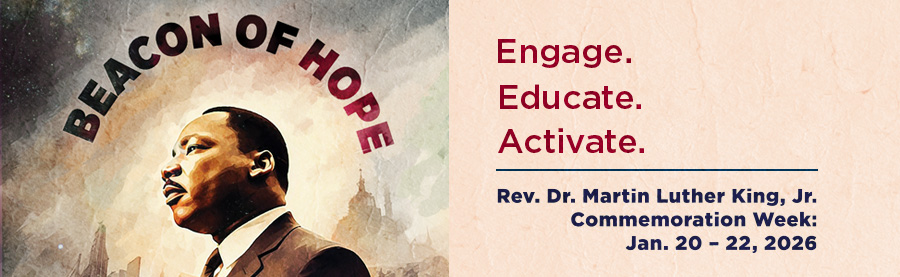
Jan. 20-22, 2026: 4th Annual Rev. Dr. Martin Luther King, Jr. Commemoration Week
Engage. Educate. Activate.
MLK Commemoration is a programming series that honors and examines the enduring legacy of Rev. Dr. Martin Luther King Jr. Held the week of the federal MLK Day holiday, our program aims to engage our community in a deep examination of Rev. Dr. King’s teachings centered in justice, equity, and social change.
Sponsored by the Division of Diversity, Equity and Inclusion.
For more information, please contact dei@rtc.edu.
Schedule of Programs
Tuesday, Jan. 20, 2026
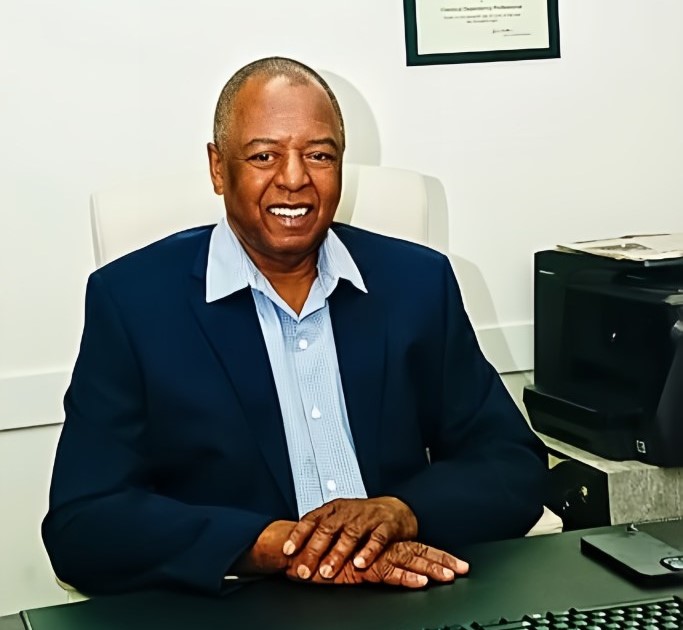 Commemoration Keynote Address
John Houston
11:30 a.m. – 12:30 p.m.
Blencoe Auditorium (C Building, 1st Floor)
Reception
1 p.m. – 2 p.m.
Library Atrium
Biography: John Wayne Houston is an entrepreneur, chemical dependency counselor, prevention specialist, community activist, and the founder of the non-profit Renton Youth Advocacy Center. He works with at-risk youth, serving as a bridge between them, the community, and law enforcement. Using his past experiences, he provides insight into the world of addiction and strategies to overcome.
He is the author of “Return to the Sunlight: A Story of Hope, Resilience, and Redemption,” his story of racism, the loss of his family’s land, his 36-year addiction, and his recent work fighting for fairness in housing, including the passage of a state law inspired by his story.
Wednesday, Jan. 21, 2026

Architects of Tomorrow: Cultivating Resilience, Hope, and Radical Self- Awareness
Sherese Danielle Ezelle, LMHC, LPC, NCC
1:30 p.m. – 2:30 p.m.
Unity Center
In celebration of the legacy of Dr. Martin Luther King, Jr., join licensed mental health therapist Sherese Danielle Ezelle for a high-impact, 60-minute integrated keynote and workshop designed specifically for the modern college student.
Today’s students and community members face a unique intersection of academic pressure, social upheaval, and the search for identity. This session reclaims Dr. King’s "Dream" as a strategic blueprint for mental fortitude. Participants will move beyond the theory of resilience to gain tangible skills for navigating multiple competing pressures.
Biography: Sherese Danielle Ezelle, LMHC, LPC, NCC, is a licensed mental health therapist and the visionary founder of Therapy with Sherese Danielle. As a strengths-based practitioner, Sherese is dedicated to helping individuals transition from a mindset of survival to one of thriving. Her work focuses on the intersection of emotional regulation, interpersonal relationships, and systemic wellness.
Thursday, Jan. 22, 2026
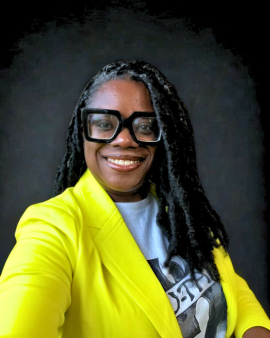 Education, Justice, Labor, and the Work of Collective Care
An MLK Reflection on Building Educational Environments Rooted in Dignity
Davida Sharpe
12:30 – 2 p.m.
Unity Center
This presentation aligns with Martin Luther King Jr.’s belief that education must serve justice, truth, and human dignity, not merely productivity or institutional preservation. By examining how educational systems can both uplift and harm, the session invites students, faculty, staff, and the broader campus community to reflect on their shared role in building learning environments rooted in equity, care, and collective responsibility. The presentation highlights the direct relationship between working conditions in educational institutions and the quality, sustainability, and integrity of student learning experiences, underscoring that justice in education must account for both teachers and learners.
Biography: Davida Sharpe is a professor, mentor, and social justice advocate whose work confronts the intersection of race, gender, and power in education. She is committed to creating systems where equity, care, and justice are not optional, but foundational. As a tenured faculty member at Pierce College, chair of the Cross-Institutional Faculty of Color Mentoring Program, and a community leader, Davida brings both lived experience and professional expertise to every table she sits at, transforming classrooms and institutions into spaces of true belonging. Her work bridges education, activism, and healing. Through teaching, public speaking, and organizing, Davida challenges systems to move beyond performative inclusion toward authentic transformation, healing, and collective empowerment. She leads through mentorship, storytelling, and advocacy, reminding us that survival is not the end goal, liberation is.
Civil Rights Eras Timeline
Rev. Dr. Martin Luther King Jr. Commemoration
1st Era – Pre-Civil Rights
2nd Era – The Civil Rights
3rd Era – Post Civil Rights
PRE-CIVIL RIGHTS ERA
1840 - Start of the Women’s Rights Movement (then called the women’s suffrage movement).
1851 - Sojourner Truth delivers her Ain’t I A Woman speech on African American women’s rights at the Ohio Women’s Rights Convention.
1865-1866 -The Black Codes are created after the Civil War with the intention of limiting the rights of black people.
1875 - Civil Rights Act was the last major law to be passed after the Civil War. It sought to give African Americans equal treatment in public transportation and accommodations and service on juries.
1883 - The U.S. Supreme court declared The Civil Rights Act of 1875.
- Start of the Gay Rights Movement
1924 - The Society for Human Rights is founded by Henry Gerber in Chicago. The society is the first gay rights organization as well as the oldest documented in America.
1929 - Martin Luther King Jr. born on January 15th.
1944 - MLK Jr begins studying Morehouse College (Atlanta, GA).
1946 - MLK Jr writes his first major letter to an editor. The Atlanta Constitution publish King's letter stating that black people "are entitled to the basic rights and opportunities of American citizens."
1948 - MLK Jr is ordained and appointed assistant pastor at Ebenezer Baptist Church.
- MLK Jr receives his Bachelor of Arts in Sociology from Morehouse College.
- MLK Jr begins studying at Crozier Theological Seminary in Chester, PA.
1950 - Founding of the Leadership Conference on Civil Rights.
Late 1950s - Early 1960s: Emergence of agricultural unions, such as the Filipino Farm Labor Union, the Agricultural Workers Organizing Committee (AWOC), the Agricultural Workers Association, and the National Farm Workers Association (NFWA).
1951 - MLK Jr receives his Bachelor of Divinity and delivers the valedictory address.
- MLK Jr begins his graduate studies at Boston University in Systematic Theology.
- Gay men in Los Angeles, CA found the Mattachine Society "to change the self-image of gay people to produce a new pride."
1953 - President Dwight Eisenhower signs Executive Order 10450, bans gay individuals from working for the federal government or any of its private contractors.
- 1st Black bus boycott Baton Rouge, LA
THE CIVIL RIGHTS MOVEMENT ERA
Start of the Civil Rights Movement
1954 - The U.S. Supreme Court decides in Brown v. Board of Education, that racial segregation in public schools in unconstitutional.
- MLK Jr. begins as pastor of Dexter Avenue Baptist Church.
1955 - MLK Jr. receives his Doctorate in Systematic Theology from Boston University.
- The Montgomery bus boycott lasts 13 months.
- Filipina, Rosalie “Rose” Bamberger establishes the first lesbian rights group, Daughters of Bilitis in San Francisco, CA.
1957 - The Little Rock Nine begin attending classes at the once segregated Little Rock Central High School.
- Civil Rights Act of 1957 is passed, protecting voting rights from the 15th Amendment, allowing civil cases to be brought through creating a federal Civil Rights Division in the Department of Justice and an executive branch Civil Rights Commission.
1960 - Lunch counter sit-ins take place launch in Greensboro, NC.
- Student Non-violent Coordinating Committee (SNCC) founded.
- MLK Jr. arrested in Atlanta and Robert F. Kennedy arranges MLK Jr.’s release.
- MLK Jr. endorses John F. Kennedy (JFK) for President.
1961 - Congress of Racial Equality (CORE) organizes 1st Freedom Ride.
1963 - March on Washington for Jobs and Freedom organized by Bayard Rustin.
- MLK Jr. delivers his I Have A Dream speech
- President JFK asked Congress to pass Civil Rights Act of 1963 before assassination that same year.
- 400-person protest march; 35 youth from interracial Central District Youth Club stage Seattle's first sit-in, occupying Mayor's office for almost 24 hours.
- Seattle Human Rights Commission proposed by City Council and Mayor. Council establishes Commission on July 17 (Ord. 92191).
- 1,000 demonstrators march from First AME Church to Federal Courthouse in Seattle. Coincides with Martin Luther King's March on Washington.
- The Seattle Public School District becomes the first major school system in the country to initiate a voluntary desegregation plan.
- Equal Pay Act, prohibits employers from gender-based wage discrimination, is passed.
1964 - Civil Rights Act, makes discrimination and segregation on the basis to national origin, religion, sex, color or race unlawful, required equal access to public spaces, enforced the desegregation of schools and the right to vote.
1965 - Voting Rights Act is passed; makes discriminatory voting practices, especially literacy tests, unlawful.
- Malcom X assassinated.
- Seattle Residents take part in "Freedom March" supporting marchers in Selma, Alabama. Rally supported open housing legislation and equal job opportunities. Rally began at the First African Methodist Episcopal Church and ends at the United States Courthouse. The principal sponsor of the rally is the Seattle Chapter of the NAACP.
- Start of the Farmworkers Movement
1965 - 1990 - Cesar Chavez and Larry Itliong led a grape growers strike in Delano, California, marking the birth of Farm Workers Movement.
1967 - Seattle Urban League launches Operation Equality, a three-year project that provides counsel to minorities seeking housing, sponsors educational projects, and works with fair housing groups to list available housing. The project receives funding from a Ford Foundation grant, the second grant of its kind in the U.S.
1968 - Fair Housing Act is passed prohibiting discrimination in the housing market based on familial status, disability, religion, national origin, sex, color, or race.
- MLK Jr. assassinated.
POST CIVIL RIGHTS MOVEMENT ERA
1969 - The Stonewall uprising ignites the modern Gay Rights Movement after police raid the popular Stonewall Inn gay bar in New York City’s Greenwich Village.
1972 - Federal civil rights law, Title IX-the Prohibition of Sex Discrimination, is passed.
- Start of the Disability Rights Movement.
1973 - Federal law, Section 504 of the Rehabilitation Act-prohibiting employment discrimination based on disability in federally assisted programs or activities, is passed.
1977 - The 504 Sit-Ins, a non-violent disability rights protest to demand accessibility rights.
1983 - MLK Jr.’s birthday declared a federal national holiday.
1990 - The “Wheels for Justice March” ends with the “Capital Crawl” when activists leave their mobility aids and make their way up the Capital Building stairs.
- Federal law, The Americans with Disability Act (also known as the ADA) is passed prohibiting discrimination against people with disabilities in housing, education, employment and public services.
1994 - The North American Free Trade Agreement (NAFTA) establishing a free trade zone for the U.S, Mexico and Canada.
1998 - Section 508 Amendment - electronic and information technology accessible to all.
2000s - Laws prohibiting homosexual activity are struck down and a Supreme Court ruling legalizes same-sex marriage.
2003 - In the case of Lawrence v. Texas, the U.S. Supreme Court rules that state laws criminalizing private, consensual sexual activity between adults are unconstitutional, effectively decriminalizing homosexuality in the United States.
2004 - Massachusetts becomes the first U.S. state to legalize same-sex marriage.
2010 - The U.S. Congress repeals the “Don’t Ask, Don’t Tell” policy, allowing gay, lesbian, and bisexual people to serve openly in the U.S. Military.
2015 - The U.S. Supreme Court rules in Obergefell v. Hodges that state-level bans on same-sex marriage are unconstitutional, legalizing same-sex marriage in all fifty states.
2016-2024: Continued advancements in LGBTQ+ rights, including increased visibility and representation, as well as ongoing challenges and setbacks.
Sources
Stanford University, King Research and Education Institute Major King Events Chronology: 1929-1968
The Library of Congress The Civil Rights Era Timeline
The Seattle Civil Rights & Labor History Project Activist Oral Histories
Seattle Municipal Archives Civil Rights Timeline
Timeline of Disability Rights in the United States Americans with Disabilites Act
Women's Rights Timeline National Archives
Timeline of Agricultural Labor in the U.S. National Farm Worker Ministry
“Gay rights timeline: Key dates in the fight for equality” - Miranda Leitsinger NBC News